Capital Projects: Why They Fail — And How to Make Better Decisions
14 Sep 2026 - 16 Sep 2026 | London, United Kingdom
Course overview:
Major capital projects fail for remarkably consistent reasons — regardless of sector, geography, or technical complexity. Cost overruns, schedule delay, disputes, and reputational damage are rarely accidental. They are typically embedded early, reinforced by governance structures, commercial incentives, behavioural bias, and misplaced confidence in process and documentation. This advanced programme challenges conventional project training by focusing not on compliance, tools, or theory — but on how capital projects actually behave.
- Boards, sponsors and investment committees
- Project directors and execution managers
- Commercial, contracts and QS professionals
- In-house and external legal advisers
- Senior technical and delivery leads
By the end of this programme, participants will be able to recognise the structural causes of capital project failure and identify how early assumptions, governance weaknesses, and behavioural bias embed cost overruns and delay long before execution begins. They will strengthen judgement-led decision-making under uncertainty, critically evaluate risk allocation and commercial structures, and distinguish between contractual risk transfer and real exposure.
- How Capital Projects Really Succeed or Fail
- Early Assumptions That Lock in Failure
- Risk Allocation
- Commercial Structures That Destroy Value
- Technical Risk vs Perceived Risk
- Judgement Meets Quantitative Risk
- Schedule, Interfaces & the Myth of Control
- Disputes: Why They Are Usually Inevitable
- Governance Failure at Board & Sponsor Level
- Reputation, Careers & Institutional Memory
- What Actually Improves Outcomes?
Course facilitator:
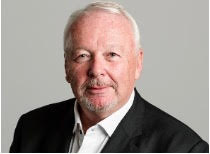
Graeme Fawcett
Graeme is a seasoned contracts and commercial advisor with over 30 years’ experience delivering complex energy infrastructure projects. His background spans engineering, shipbuilding, and offshore oil & gas, with recent work in battery storage and grid developments. He has supported major operators and contractors—including Shell, Total, Tullow, and Technip—and currently advises Rampart Capital LLP on regulatory strategy, planning processes, and grid connection reforms involving Ofgem and NESO. With extensive experience in EPC and EPCIC delivery, Graeme is known for aligning technical objectives with robust commercial frameworks and practical contract execution.